
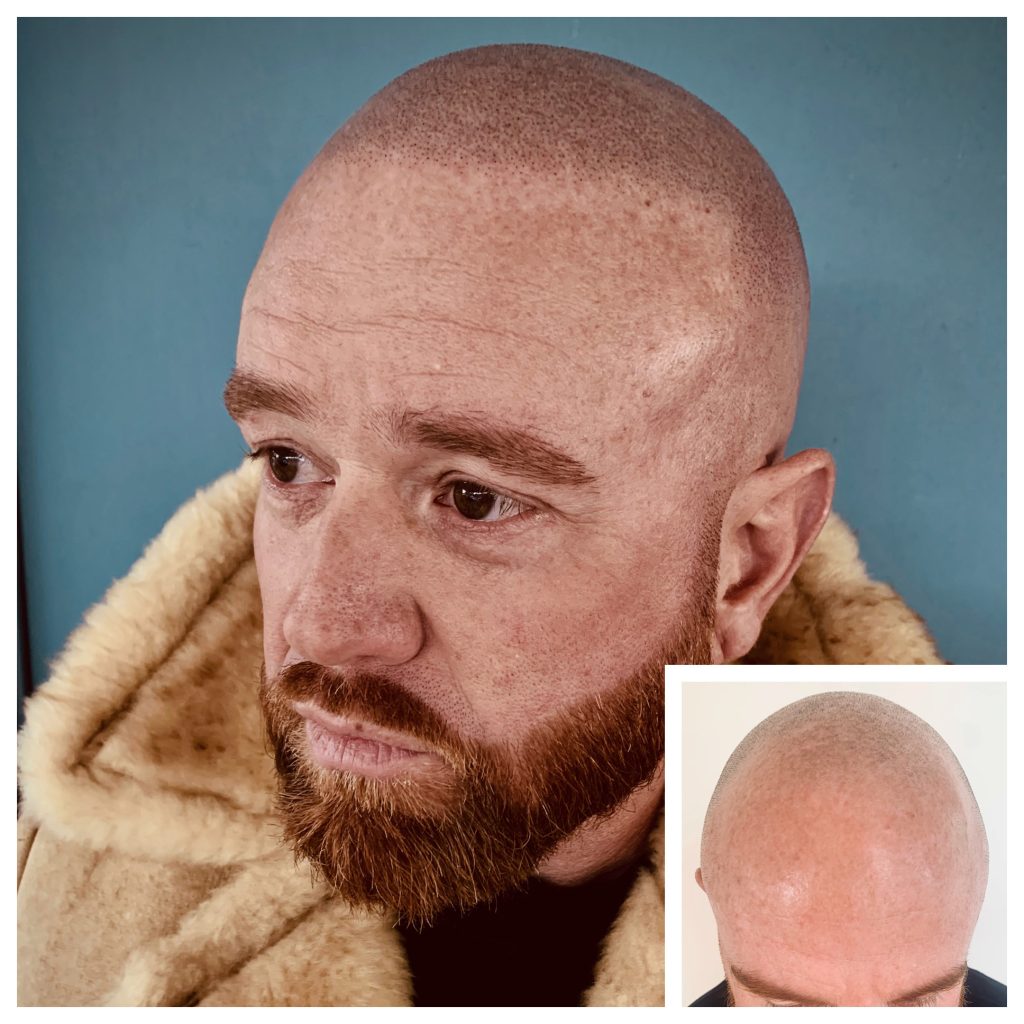
By Peggy Pliscott, SMP Artist at Precision Scalp
You’ve done your research on SMP and you’re seriously considering it. But somewhere between the before-and-after photos and the price quotes, a quieter question creeps in: what can actually go wrong? Scalp micropigmentation side effects are mostly mild and short-lived, though a small number are genuine red flags. Here’s what to expect, what’s normal, and what warrants attention.
1. Redness and swelling are expected, not alarming
After a scalp micropigmentation session, your scalp will almost certainly look red and feel tender. This is a normal inflammatory response to the needle, and it typically settles within 24 to 48 hours.
Some men also notice mild swelling around the hairline or forehead on the day of treatment. It’s your body responding to the micro-deposits of pigment being placed into the skin, not a sign that something has gone wrong. Keep the area dry and out of direct sun for the first few days, and the redness usually fades without any intervention.
2. Pigment appears darker immediately after treatment
One of the most common concerns clients raise is that their SMP looks too dark right after the session. It does. The pigment sits closer to the surface while the skin is healing, which makes it appear more intense than the final result will be.
Over four to seven days, the top layer of skin exfoliates naturally and the pigment softens to its intended tone. The finished look only becomes apparent once healing is complete, which is exactly why SMP is delivered across multiple sessions rather than a single sitting. Patience between sessions is part of getting the result right.
3. Infection is rare but becomes a risk with poor aftercare
Infection is one of the SMP risks that rarely materialises when you follow proper aftercare, but it’s worth understanding. The scalp is being penetrated by a needle repeatedly, which creates a temporary vulnerability to bacteria.
Signs of infection include persistent redness beyond three days, localised heat, oozing, or an unpleasant smell. None of these are normal. If you notice any of them, contact your practitioner and seek medical advice promptly. You can significantly reduce this risk by keeping the scalp clean, avoiding gyms and swimming pools for at least five days, and resisting the urge to touch or scratch the treated area.
4. Allergic reactions to pigment are uncommon but possible
A genuine allergic reaction to SMP pigment is uncommon, but it does happen. The pigments used in quality scalp micropigmentation are inorganic and specifically formulated to minimise the risk of reaction, though individual sensitivities vary.
Symptoms of an allergic response include persistent itching, raised bumps along the treated area, or a rash that spreads beyond the scalp. If you have a known history of skin sensitivity or reactions to cosmetic tattooing, flag this before your consultation. A patch test can be performed before your first full session to assess your skin’s response: a straightforward precaution that removes a great deal of uncertainty.
5. Pigment migration is a sign of technique, not just bad luck
Pigment migration, sometimes called blurring or spreading, is one of the micropigmentation complications that comes up most in online forums. It happens when pigment moves beyond the intended dot placement, creating a smudged appearance rather than crisp, defined follicle impressions.
The cause is almost always technical: needles implanting pigment too deep, incorrect pigment consistency, or excessive pressure during application. A practitioner who understands the correct depth for scalp tissue, specifically the upper dermis, and who uses pigments formulated for scalp work rather than standard tattoo ink, dramatically reduces this risk. This is one of the clearest reasons why choosing an experienced SMP specialist matters far more than finding the lowest price.
Most men who experience side effects after SMP describe nothing more than a tender scalp for a couple of days and some initial darkness in the pigment. Serious complications are rare when the work is done correctly and aftercare instructions are followed. Knowing what to expect, and what to watch for, puts you in control of the process from the start.
Frequently Asked Questions
How long do scalp micropigmentation side effects typically last?
Most scalp micropigmentation side effects, including redness, tenderness, and surface darkening of the pigment, resolve within four to seven days. Swelling around the hairline usually settles within 48 hours. If redness, itching, or discomfort persists beyond a week, contact your practitioner, as this may indicate an allergic response or early infection.
Is scalp micropigmentation safe for sensitive skin?
Scalp micropigmentation can be performed on sensitive skin, but a patch test is strongly recommended beforehand. Quality SMP pigments are inorganic and formulated to minimise reactions, but individual sensitivities vary. Disclose any history of skin conditions, cosmetic tattoo reactions, or known allergies to your practitioner before booking your first session.
What is the difference between normal healing and a sign of infection after SMP?
Normal healing after scalp micropigmentation includes mild redness, tenderness, and slight flaking as the skin exfoliates over four to seven days. Signs of infection are distinct: persistent redness beyond three days, localised heat, oozing, worsening swelling, or unusual odour. If you notice any of these, seek medical advice promptly rather than waiting.
Can scalp micropigmentation pigment fade or change colour over time?
Yes, SMP pigment does fade gradually over several years, which is normal and expected. However, if pigment shifts to a blue or green tone, this typically indicates that unsuitable pigment was used, such as standard tattoo ink rather than pigment formulated specifically for scalp work. Choosing a specialist who uses correct SMP-grade pigments significantly reduces this risk.
How can I minimise the risk of complications after a scalp micropigmentation session?
To minimise SMP risks after treatment, keep the scalp dry for the first four days, avoid gyms, swimming pools, and direct sun exposure for at least five days, and do not scratch or pick at the treated area. Follow your practitioner’s specific aftercare instructions precisely. Most micropigmentation complications arise from aftercare failures rather than the procedure itself.