
By Peggy Pliscott, SMP Artist at Precision Scalp
You’re losing hair and you know exactly why — PCOS — but knowing the cause doesn’t make looking in the mirror any easier. This article explains how scalp micropigmentation addresses the kind of diffuse thinning that polycystic ovary syndrome causes, and what realistic results look like when hormones are still in play. You’ll walk away knowing whether SMP is the right move for you right now.
Why PCOS hair thinning looks and behaves differently
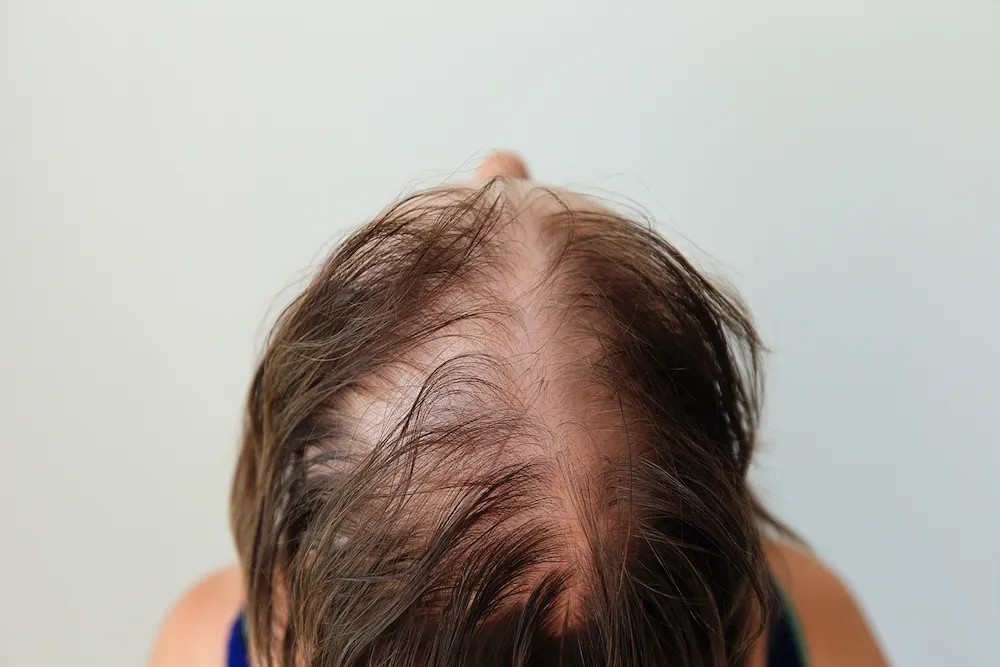
Polycystic ovary syndrome drives hair loss through elevated androgens, particularly dihydrotestosterone (DHT), which miniaturises follicles over time. The result is diffuse thinning, most visible at the crown and parting, rather than the defined recession patterns seen in other forms of hair loss.
Because the hair doesn’t fall in a clean zone, it can feel insidious. You notice the scalp showing through more than usual, the parting widening, or the ponytail suddenly feeling thin. For many women, that visible change lands harder than any other PCOS symptom. Hair is deeply tied to identity, and losing it can affect confidence in ways that are difficult to explain to someone who hasn’t been there.
The hormonal nature of polycystic ovary hair thinning also means it rarely resolves on its own. Even with medication, progress is slow and shedding can continue in phases. That’s the context in which a density SMP procedure becomes worth understanding properly.
What SMP actually does for diffuse female hair loss
Female density SMP is not about shaving the head. It works with your existing hair, placing precise pigment impressions between the hairs you still have to make the scalp less visible and the overall density appear greater. It’s the difference between your scalp showing through and a full, natural-looking coverage, without touching a single strand.
The pigment is deposited at a superficial depth into the scalp using a fine needle, replicating the look of hair follicles at the skin surface. Done well, these impressions sit naturally among your real hair and are invisible up close. The technique demands a genuine understanding of colour, light, and the way hair grows, which is why the artist’s eye matters as much as the technical skill.
For women dealing with PCOS-related hair loss, the primary goal is reducing scalp visibility at the parting and crown. Results are visible from the first session, though the full procedure requires a minimum of three sessions, and occasionally four, to build depth, refine tone, and ensure the result holds evenly across the treated area. Each session is spaced to allow the skin to settle and the pigment to be assessed in natural light before the next layer is added.
Managing expectations when hormones are still fluctuating
This is the part most consultations gloss over, and it’s the part that matters most for women with PCOS. If your androgen levels are still elevated or unstable, your natural hair is likely still thinning to some degree. SMP addresses the visual problem now; it doesn’t stop the underlying hormonal process.
That means the result you leave with after your sessions may look different in two or three years if significant further thinning occurs. The pigment itself is stable; it’s the hair around it that may continue to change. Women actively managing PCOS with medication, particularly anti-androgens like spironolactone, or working with an endocrinologist to stabilise hormones, tend to see more durable outcomes because the rate of further follicle miniaturisation is slowed.
It’s also worth understanding that SMP is not a one-time-forever solution. Most women return for a maintenance or refresh session every few years, which is straightforward and far less involved than the original procedure. Pairing SMP with ongoing hormonal treatment isn’t just advisable; for most women with active PCOS, it’s the combination that produces results that last.
If you’re not yet being treated medically for your PCOS hair thinning, it’s worth having that conversation with your GP or a specialist before or alongside an SMP consultation. The two approaches work better together than either does alone.
What to look for in an SMP artist for this specific procedure
Female density SMP is technically demanding. The pigment must be matched precisely to your natural hair colour, accounting for the fact that hair colour and scalp tone interact differently in different light conditions. Impressions that look natural indoors can appear stark under daylight if the tone, depth, or distribution is misjudged.
Because PCOS hair loss often affects the crown and central parting most visibly, an artist working in this area needs a strong spatial sense and genuine experience with diffuse female thinning patterns. Ask to see before-and-after examples specifically of women with similar hair colour and thinning patterns to yours, not just the easiest or most dramatic transformations in a portfolio.
The consultation process matters too. A thorough consultation for PCOS-related hair loss should cover your hormonal history, current treatment, the rate of your thinning, and what realistic density improvement looks like for your specific scalp. If a consultation doesn’t touch on the hormonal dimension, that’s worth noticing.
Frequently Asked Questions
Can SMP work if my PCOS hair loss is still progressing?
Yes. SMP can address your current level of thinning even if some progression continues. The pigment is stable, but if significant further thinning occurs, a refresh session may be needed in future years. Combining SMP with medical treatment for PCOS gives the most durable long-term result.
How many sessions does a female density SMP procedure take?
Female density SMP requires a minimum of three sessions, and occasionally four if needed, to build natural-looking depth and ensure the pigment settles evenly. Each session is spaced to allow the skin to settle so the artist can assess the result in natural light before adding the next layer.
Will SMP make my hair look visibly thicker straight away?
You’ll see a visible improvement in scalp coverage from your first session. The full result builds across all sessions as pigment density increases. Most women notice the parting and crown area looking significantly less exposed, and the overall impression of fullness is clear once the complete procedure is finished.
Does polycystic ovary hair thinning affect where SMP is applied?
PCOS-related hair thinning typically presents as diffuse loss concentrated at the crown and central parting, which is the primary treatment area for female density SMP. Your artist should map the pigment distribution specifically to your thinning pattern rather than applying a generic template.
Is there anything I should do medically before getting SMP for PCOS hair loss?
It’s worth consulting your GP or an endocrinologist about managing your PCOS hormonally before or alongside SMP. Stabilising androgen levels slows ongoing follicle miniaturisation, which helps preserve your SMP result for longer. SMP and hormonal treatment work better in combination than either does independently.