
By Peggy Pliscott, SMP Artist at Precision Scalp
Your parting looks wider than it did a few years ago, or your ponytail feels thinner in your hand. You’re wondering whether anything can actually make a visible difference without surgery or a lifetime of topical treatments. This article explains exactly what scalp micropigmentation density work involves for women, who it suits, and what realistic results look like.
Why hair thinning affects women differently
Female hair loss is more common than most people realise, yet it carries a particular emotional weight. Hair is deeply tied to identity, femininity, and confidence, and thinning is rarely something women feel comfortable discussing openly.
The causes vary: hormonal shifts after pregnancy or during perimenopause, androgenetic alopecia, thyroid conditions, nutritional deficiencies, and prolonged stress are among the most frequent. In many cases, the hair doesn’t disappear entirely. It simply becomes finer and more sparsely distributed, leaving the scalp visibly showing through.
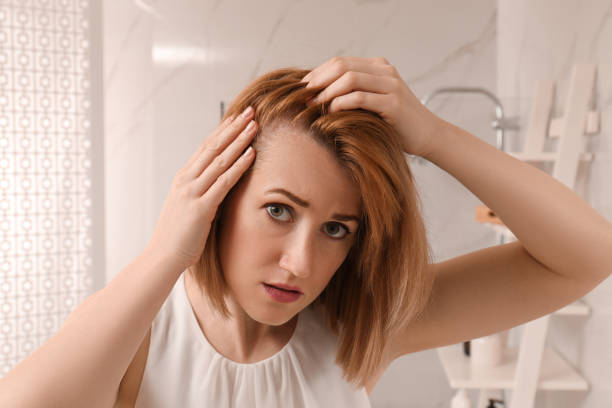
That visible scalp is precisely what a female hair density SMP procedure addresses. Pigment is placed between existing hairs to reduce the contrast between hair and scalp, creating the appearance of greater density. The result is not new hair growth; it’s a skilled optical illusion that works with what you already have.
How female density SMP differs from other applications
Women’s scalp micropigmentation for density is a specialised technique, distinct in several important ways. The hair is never shaved. The entire procedure works around your existing length and style, so there is no dramatic change in appearance on the day of your first session.
Pigment dots are placed with a finer touch and at lower saturation than a full-coverage application, because the goal is to blend seamlessly with hair that is still present rather than to recreate a full hairline from scratch. Colour matching is critical: the pigment must replicate the exact tone of your natural hair, whether that’s light brown, dark blonde, grey-blended, or any other shade.
This is where artistic training makes a genuine difference. The eye has to read pigment placement as natural shadow beneath hair strands, not as dots sitting on the surface of skin. Spacing, depth, and tone all have to work in harmony across the entire treatment area.
Sessions are spread several weeks apart to allow the skin to settle and the pigment to stabilise. A minimum of three sessions is standard for women’s density work, with a fourth sometimes added where thinning is more extensive or the desired result requires additional layering. Rushing the process produces flat, unconvincing results.
Who is the best candidate for this procedure
Women’s scalp micropigmentation density work suits a wide range of presentations, but the strongest candidates share a few characteristics. Hair should be present across the thinning area, even if fine or sparse. Density SMP performs best when it has existing strands to work alongside; it fills gaps rather than replacing hair entirely.
The most commonly treated areas are a widening parting, diffuse thinning across the crown, and a hairline that has receded slightly or lost density at the front. Women experiencing post-partum shedding, early-stage androgenetic thinning, or the gradual density loss that comes with ageing are among those who see the most compelling outcomes.
Women with very light or white hair require careful discussion during consultation, because the contrast between pigment and hair colour is the core mechanism of the technique. It is achievable, but the colour palette and placement strategy need to be thoroughly considered before any needles touch skin.
One distinct advantage for women is that there is no lifestyle disruption comparable to a dramatic haircut or a shaved look. You leave each session looking like yourself, with incrementally more fullness becoming visible as the sessions progress.
What results look like and how long they last
After the full course of sessions, treated areas show noticeably reduced scalp visibility. A widened parting closes down visually. A thinning crown regains the appearance of depth and shadow. The result reads as natural because it works with light and shadow in the same way real hair density does.
Most women find the change significant enough to stop relying on volumising fibres or scalp concealers, which is often a meaningful shift in daily confidence. The pigment is not permanent in the way a standard tattoo is; it is designed to fade gradually over time, typically requiring a refresh session every few years to maintain the result.
Hair density treatment for women at this level of specificity requires a practitioner with both technical precision and a genuine understanding of proportion and aesthetics. The difference between a result that looks natural and one that doesn’t comes down almost entirely to the calibre of the artist placing the pigment.
Frequently Asked Questions
Does female hair density SMP require shaving the head?
No. Female hair density SMP is performed on unshaved hair throughout the entire course of sessions. The technique works between your existing strands, adding pigment to the scalp to reduce visible contrast. Your hair length, colour, and style remain unchanged, making it a discreet option that produces a gradual, natural-looking result.
How many sessions does a women’s density SMP procedure take?
Women’s scalp micropigmentation density procedures require a minimum of three sessions, spaced several weeks apart to allow the skin to heal and pigment to stabilise. Some clients benefit from a fourth session, particularly where thinning covers a larger area or additional layering is needed to achieve the desired level of fullness.
What areas of the scalp can be treated with density SMP?
The most commonly treated areas for women are a widening central parting, diffuse thinning across the crown, and reduced density along the frontal hairline. Density SMP can also address localised patches where hair has become noticeably thinner. The procedure is tailored to your specific pattern of thinning rather than applied as a uniform treatment.
How long does the result from a hair density treatment last?
The pigment used in scalp micropigmentation is designed to fade gradually over time rather than remain as a fixed tattoo. Most women find their result holds well for several years before a refresh session is needed to restore the original level of density. Sun exposure and skincare habits can influence how quickly fading occurs.
Can women with grey or light-coloured hair have density SMP?
Yes, though it requires careful planning during consultation. Women with grey, white, or very light hair can have scalp micropigmentation for density, but the pigment colour must be matched with particular precision because the contrast between hair and scalp tone is subtler. An experienced practitioner will assess your colouring and adjust the palette and placement accordingly.