
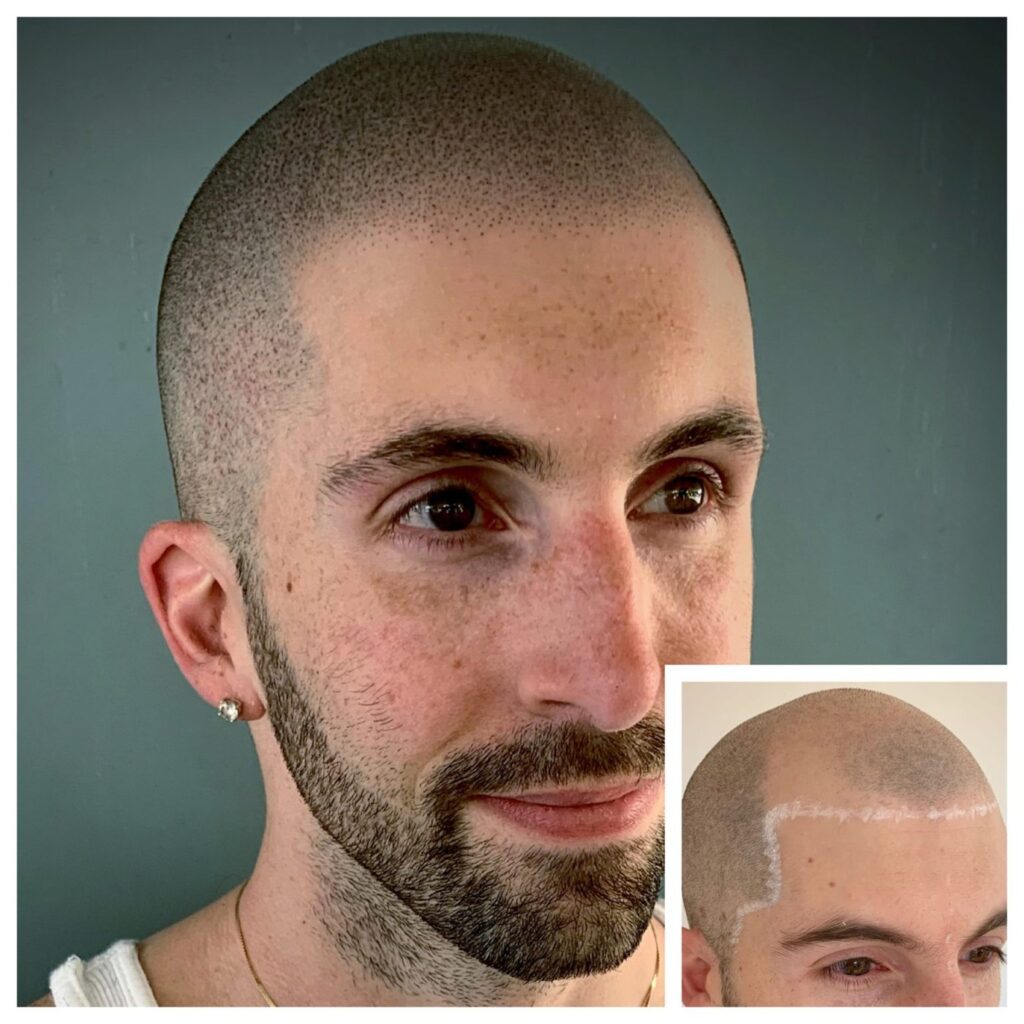
To prepare for scalp micropigmentation, arrive with a clean, calm scalp and avoid anything that causes irritation, sunburn or heavy sweating beforehand. Tell me about allergies, skin conditions, medications and your hair-loss pattern. We will discuss your design, hairline and pigment choice before I begin, with numbing used during treatment.
What should I do before scalp micropigmentation?
I recommend washing your hair and scalp before your appointment, unless I have given you different instructions. Clean skin allows me to assess the scalp properly and place pigment accurately, particularly when treatment is being applied between existing hairs for added visual density.
Come with your scalp in its usual, healthy condition. Avoid arriving with sunburn, cuts, open skin, a fresh chemical treatment, aggressive exfoliation or significant irritation. Vigorous scratching can also leave the surface tender. If your scalp is inflamed or unusually sensitive, tell me before we begin so I can decide whether it is sensible to proceed.
It is also helpful to arrive without heavy styling products, oils, hair fibers or concealers. I need to see the areas being treated clearly, including how your existing hair grows and where the scalp shows through.
Plan for the aftercare before you book your appointment. You will need to keep the scalp dry and avoid activities that cause sweating during the early healing period. That means arranging your schedule around exercise, steam rooms, hot showers, swimming and sun exposure.
For a more detailed guide to preparing for a density treatment, you can read my guide to getting ready for your first density treatment.
What should I tell my practitioner before treatment?
A thorough consultation is an important part of SMP preparation, not a formality. Tell me about all known allergies, previous reactions to tattoo or cosmetic pigments, current skin conditions and any relevant medical history. This helps me assess whether treatment is appropriate and whether anything should be postponed.
SMP should not be carried out over active eczema, psoriasis, infection or other inflamed skin. If you have a history of keloid or spontaneous keloid scarring, discuss this with a dermatologist before booking, because tattooing can trigger abnormal scarring. If you notice any new scalp problem before your appointment, contact me rather than trying to cover it.
If your hair loss is diffuse or has changed recently, the pattern matters. Scalp micropigmentation creates the appearance of density, but it does not grow hair, alter natural hair growth or treat the cause of hair loss. When female pattern hair loss is suspected, medical assessment and blood tests may be appropriate to exclude other conditions, metabolic issues or hormone imbalances that can look similar.
Bring questions about the result you want, including whether you plan to keep your hair very short or retain longer hair. I offer treatment for several concerns, including female SMP, male density, alopecia, scars, repair and shaved styles. If your needs relate specifically to male density, my scalp micropigmentation for men page explains that service in more detail.

What happens during the appointment?
Before any pigment is applied, I assess your hair-loss pattern, existing hair, scalp and overall proportions. We discuss the treatment area and agree on the design. For someone who is fully bald, the hairline should be considered in relation to facial structure and age, rather than drawn as an artificially low or perfectly straight line.
Pigment is selected to match your current follicle color. I do not simply choose the darkest shade available. Hair color, skin tone, existing density and your preferred hairstyle all affect the decision. The aim is for the dots to sit naturally with your appearance as it is now and remain practical if your hair changes later.
I use a numbing agent to reduce discomfort. SMP is a cosmetic tattoo treatment, so some sensation is still possible, but the experience varies from person to person. I work carefully and build the result gradually rather than trying to create a finished appearance in one pass.
A full course involves several appointments. Female SMP and male density always require a minimum of three sessions, and sometimes four. The spacing and exact plan depend on the area, the starting point and how the scalp settles between sessions. Each visit gives us an opportunity to assess the healed result and make considered adjustments.
How should I plan for healing after SMP?
Healing is part of the preparation because your first few days need some planning. Keep the scalp dry during days one through four, including avoiding shampoo, sweating and shaving. A shower cap can help when bathing. Avoid hot showers, strenuous exercise and steam rooms because heat and perspiration can interfere with settling.
From approximately days five through ten, gentle washing can usually resume according to the aftercare instructions I give you. Avoid direct sun on the scalp for the first ten days of healing. From around day ten, normal grooming and broad-spectrum sunscreen can generally be resumed, while swimming pools should be avoided for 28 days. Full healing takes approximately 30 days.
Color can look stronger immediately after treatment and then soften as the scalp heals. Lightening is normal, so do not panic or try to correct it yourself. Do not pick scabs or interfere with flaking. If I recommend a petrolatum-based moisturizer such as Aquaphor or Vaseline, apply it as directed to help prevent scab formation.
Long term, sun protection helps protect the pigment. SMP is intended to be a lasting cosmetic treatment, but pigment gradually fades and may need refreshing over time. The rate varies with sun exposure, skin type, age and lifestyle.
How do I choose the right SMP practitioner?
Preparation also means checking who will perform the treatment. Review healed work, not only freshly completed photographs, and pay particular attention to hairline work. A natural hairline depends on proportion, spacing and restraint, so it is one of the most useful areas to assess when comparing practitioners.
Before booking, ask about SMP-specific training, body art licensing, bloodborne pathogens certification, county health requirements and studio hygiene. You should be able to see a clean studio, packaged needles opened in front of you and appropriate barrier protection, including gloves, masks, barrier tape and device guards. You should also understand the pigments and technique being used.
I am Peggy Pliscott, and I trained in Los Angeles in SMP after working as a celebrity makeup artist and photographer. Precision Scalp is based in Oak Brook, Illinois, in the Chicago area. My consultation is where we can review your goals, scalp condition, hair pattern and realistic expectations together.
If you develop unusual discomfort, excessive redness, warmth or swelling, contact the studio. Fever, pus or drainage, severe pain, severe redness or marked swelling should also be discussed promptly with your healthcare provider.
If you would like to discuss your situation, you can contact Precision Scalp about a consultation.
Frequently asked questions
Should I shave my head before an SMP appointment?
Not necessarily. The right approach depends on your remaining hair and the design. Fine stubble can help SMP blend with existing hair, while more advanced hair loss may suit a fully shaved look. I will discuss the most practical grooming length during consultation rather than asking you to make that decision alone.
Can I use hair fibers before my appointment?
It is best to arrive without hair fibers, concealers, oils or heavy styling products. These can hide the scalp and make it harder to assess your natural density, hair direction and treatment boundaries. Wash them out before the appointment so I can work from a clear view of the area.
How many sessions will I need for female SMP?
Female SMP always requires a minimum of three sessions at Precision Scalp, and sometimes four. The final plan depends on the amount and pattern of thinning, the area being treated and how your scalp settles. A consultation gives us a more useful answer than applying a standard plan to every client.
Can SMP be performed over a scalp scar?
SMP can be used for some scalp scars, but the scar must be assessed first. Scar tissue can behave differently from surrounding skin, and it may need to mature fully before treatment. If you are considering scar camouflage, review my information about when a scalp scar may be ready and discuss its history during consultation.
Will scalp micropigmentation look completely solid?
No. A natural result is designed to reduce the contrast between the scalp and hair, not to look like a painted or solid covering. Some scalp showing through is normal, especially when SMP is used to create the appearance of density between existing hairs. We discuss realistic density before treatment begins.
Can I have SMP if I form keloids?
A history of keloid or spontaneous keloid scarring is an important reason to seek dermatology advice before booking. SMP involves controlled tattooing of the skin, and that trauma may trigger abnormal scarring in susceptible people. I would want this history disclosed during consultation rather than discovered on the day of treatment.
How long should I avoid swimming after SMP?
The general preparation guidance is to avoid swimming pools for 28 days while the scalp heals. You should also keep the scalp dry during the first several days and avoid sweating, steam rooms and hot showers early on. I will give you aftercare instructions suited to your treatment and healing progress.