
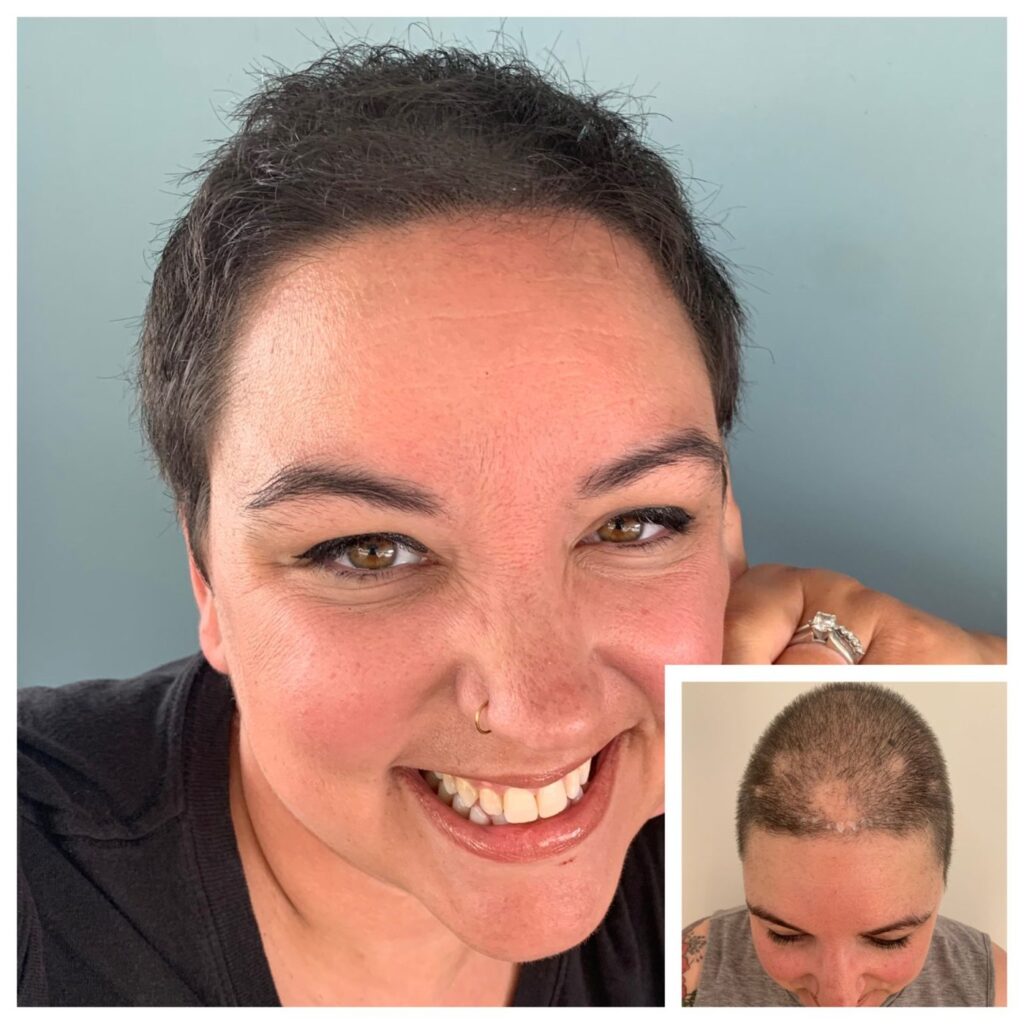
A scar may be suitable for scalp micropigmentation when it is fully healed, closed, stable in color and texture, and free from active irritation. Flat scars usually accept pigment more predictably than raised or changing scars. I assess the scar in person before recommending treatment, because every scar responds differently.
What makes a scar suitable for SMP?
When I assess a scar for scalp micropigmentation, I first look for signs that the tissue has finished healing. The skin should be closed, settled and stable rather than tender, scabbed, inflamed or changing noticeably.
A flat scar with a reasonably consistent surface is generally easier to work with than a raised, deeply indented, unusually wide or heavily textured scar. That does not automatically rule out treatment, but it can make pigment placement and retention less predictable.
I also consider the contrast between the scar and the surrounding scalp. A scar may be pale, shiny or slightly darker than nearby skin. The aim is not to erase the scar or recreate normal skin. The aim is to reduce the visual difference by placing carefully matched follicle impressions around and across the area.
I use an advanced paramedical technique for some surgical scars, accident scars and self-harm scars. I decide whether it is appropriate only after seeing the scar’s shape, surface and surrounding skin.
Is my scar ready for SMP?
If you are asking, “is my scar ready for SMP?”, the most important question is whether it has fully matured. A scar that is still red, sore, itchy, swollen or visibly changing needs more time and, where appropriate, medical advice before any cosmetic procedure.
I would also postpone treatment over active psoriasis, eczema, acne, infection or another irritated skin condition. Pigment cannot be assessed reliably when the skin is inflamed, and healing may be less predictable. Please tell me about any skin condition affecting the treatment area during consultation.
Your history of scarring matters as well. If small cuts, injections or minor injuries have previously produced raised scars or keloids, I need to know. That history does not always make treatment impossible, but it does mean the risks and suitability require careful discussion.
Medication and health history are also relevant. Tell me about medicines that affect clotting or immune response, previous reactions to tattoo pigments, and any treatment that may affect healing. I use an anaesthetic during the procedure, but comfort and safety begin with an honest consultation.

How do I assess a scar before treatment?
I assess the scar from different angles and in different lighting, because texture and shine can look very different in a photograph. I look at its width, color, depth, edges, skin quality and how it sits against the surrounding hair and scalp.
I then consider your current follicle color and the way the scar will be seen in everyday life. The pigment color is selected to match your current hair follicle color, rather than simply matching the scar or choosing a generic dark shade. This helps the result sit naturally with the rest of the scalp.
Needle depth and pigment placement must be adjusted for scar tissue. Scarred skin does not always accept pigment in the same way as unaffected skin, so I take a conservative approach and assess the response as we go. Building gradually gives me the opportunity to refine spacing, tone and coverage rather than committing to too much pigment at once.
I also discuss your preferred hairstyle. Some people want to keep their hair closely cropped, while others want the scar to be less obvious through existing hair. Scalp micropigmentation does not reproduce growing hair, so your expectations and usual haircut are part of deciding whether the treatment is a sensible match.
What can scalp micropigmentation do for a scar?
SMP scar repair is camouflage, not surgical scar revision. It can soften the visual contrast between a scar and the surrounding scalp, but it cannot change the scar’s underlying shape, thickness or texture.
Results are usually more straightforward when the scar is flat and the skin surface is relatively even. Raised, keloid, very pale, shiny or deeply uneven scars may be more difficult to blend. In those cases, I explain the likely limitations before treatment so you can make an informed decision.
Scalp micropigmentation deposits pigment into the epidermal and upper dermal layers. This is different from a traditional tattoo and is intended to limit noticeable spread while keeping the follicle effect natural. The treatment is intended to be permanent, although laser treatment can remove it later if necessary.
Because scar tissue can respond unevenly, a complete visual match cannot be promised. The finished result depends on the scar, your skin, your natural follicle color and how the pigment heals. My goal is a balanced reduction in contrast, not an unrealistic promise that the scar will disappear.
How should I choose a practitioner for scar camouflage?
Scar work requires more than placing dots in a regular pattern. I look closely at how the tissue responds, how much space is needed between impressions and how the treatment will blend with the surrounding scalp. Patience and restraint are important, especially during the first session.
When you compare practitioners, ask to see relevant healed work rather than relying only on fresh treatment photographs. I would also pay close attention to hairline design in their wider portfolio. A poorly designed hairline can make an otherwise careful SMP result look unnatural.
My background in professional photography and makeup has taught me to study light, color and texture closely. I trained in SMP in Los Angeles, and I use that visual experience when assessing how a scar will appear from normal viewing distances.
Precision Scalp is based in Oak Brook, Illinois, serving clients from the Chicago area. You can review the studio location and contact details before arranging a consultation. If you are also considering treatment for broader hair loss, my page about SMP for men explains how that work differs from scar camouflage.
If you would like me to assess your scar, you are welcome to book a consultation whenever you feel ready.
Frequently asked questions
Can a red scar receive scalp micropigmentation?
Usually, I would wait while a scar is still red, tender, itchy or visibly changing. Redness can indicate that the tissue is still maturing or irritated, and pigment may not heal predictably. I assess the scar’s history and current appearance before suggesting whether treatment should proceed or be delayed.
Can raised scars be treated with SMP?
Raised scars are not automatically excluded, but they are more challenging than flat scars. Their texture and height can affect pigment retention and the way light reflects from the area. If you have a history of keloids or raised scarring, tell me before any treatment so we can discuss suitability carefully.
Will SMP make my scar completely disappear?
No. Scalp micropigmentation is designed to camouflage a scar by reducing the contrast with nearby follicles. It does not remove scar tissue or change its texture. I explain the likely degree of blending during consultation, including any limitations created by a pale, shiny, wide, raised or uneven scar.
Should I bring medical information to my consultation?
Yes. Please bring details of relevant skin conditions, medicines, allergies, previous reactions to pigments and any history of raised or keloid scarring. This information helps me assess healing and safety. If a medical issue is active at the treatment site, you may need advice from your healthcare professional first.
Is a patch test available before SMP scar repair?
A small patch test on an inconspicuous area can help identify a pigment reaction before full treatment. I can discuss whether one is appropriate for you during consultation, particularly if you have reacted to tattoo pigments or cosmetics before. A patch test does not predict every possible treatment response.