
By Peggy Pliscott, SMP Artist at Precision Scalp
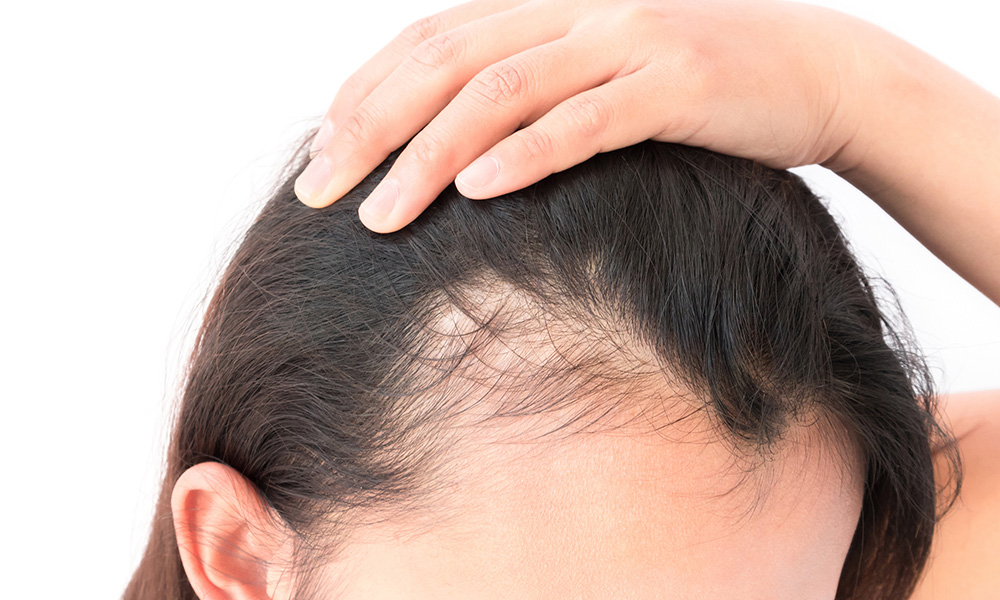
You have accepted that your hair is thinning, you have done the research, and now you are wondering what actually happens when you sit in the chair. That is exactly what this article answers. Each of your three SMP sessions is explained below, along with what your scalp looks like in between and what the fully healed result looks like for women dealing with diffuse thinning or hairline recession.
Why female SMP takes three sessions, not one
Female scalp micropigmentation for hair density always requires a minimum of three sessions, occasionally four. This is not padding the process: it reflects how pigment behaves in the skin and how the scalp responds to repeated treatment.
At Session 1, the practitioner deposits pigment at a conservative density, roughly 40 dots per square centimetre, using a 0.2 mm single-point needle along the hairline border and a 0.25 mm triple-point needle across the crown and vertex. This lighter initial pass allows the skin to settle before more pigment is added. It also allows the practitioner to assess how your specific skin type holds and absorbs colour.
Going too dense too soon risks pigment bleeding, where dots spread and merge rather than reading as individual hair follicles. Starting lighter and building across sessions produces a result that looks like real hair at every stage, rather than a solid block of colour that fades unevenly.
What your scalp looks like between sessions
After Session 1, your scalp will look noticeably red for two to three days. The dots themselves appear darker and sharper than the healed result, which often surprises people. Do not adjust your expectations based on what you see in the first week: this is not the finished look.
Between days one and four, keep water off your scalp entirely. No shampoo, no sweating, no swimming. From day five onwards, gentle washing is fine, but stay out of direct sun and avoid pools for 28 days after your final session. From day ten, apply SPF 30 to 50 to the treated area every day, as sun exposure is the primary driver of pigment fading over the years.
By days seven to ten, you will notice the dots appear to lighten considerably. Some clients worry the result has disappeared. It has not. Epidermal pigment clears through normal skin turnover within roughly 27 days, while the dermal pigment, the layer that persists, settles into a softer, more natural tone. This is exactly what is supposed to happen, and it is why Session 2 exists: to assess what has held and to build on it.
Sessions are spaced four to six weeks apart, allowing full healing before more pigment is added. Arriving at Session 2 before the skin has healed properly risks overstimulation and uneven results.
How each session builds the result
Session 2 adds density. The practitioner increases dot coverage progressively, often reaching 60 to 80 dots per square centimetre, and refines the hairline border where needed. For female clients, the hairline rarely recedes in the same pattern as male pattern baldness: the more common concern is diffuse thinning across the crown and mid-scalp, with the frontal hairline largely intact. Pigment placement is adjusted accordingly, with lighter work at the natural hairline edge and denser coverage behind it to create the illusion of greater hair mass.
After Session 2, the healing process repeats: redness for two to three days, apparent darkening, then gradual softening. The result will look noticeably fuller than after Session 1, but it is still not the finished outcome.
Session 3 is the refinement pass. Density is brought to its final level, up to 80 to 100 dots per square centimetre where needed, and any areas that faded more quickly, such as regions where the skin is oilier or where sun exposure has been higher, are addressed. Scarring alopecia cases typically require closer attention at this stage, as scarred tissue absorbs pigment differently and can show greater fading between visits.
A fourth session is occasionally recommended after full healing, particularly where coverage was uneven or where fading was faster than expected. This is not a failure of the process: it is the process working as designed, with the practitioner responding to how your specific skin has reacted.
What the fully healed result looks like for women
Full healing takes approximately 30 days after your final session. Once healed, the treated area shows a consistent impression of hair follicle density: not individual hairs, but the visual effect of a fuller, denser scalp. At the hairline, dots are placed with graduated spacing to avoid a hard-edged appearance. At the crown and mid-scalp, the density creates contrast that reduces the visible paleness of thinning areas.
The result is designed to be seen in person, not only in photographs. In natural light, with hair styled over the treated area, the scalp reads as fuller. Female clients with diffuse thinning often report that they stop self-consciously adjusting their hair in the wind or under bright lighting.
Longevity varies. Results typically hold well for three to five years, with most clients returning for a touch-up appointment at around the three to four year mark. Oily skin, high sun exposure, certain medications, and faster cellular metabolism all accelerate fading. Mature skin, consistent SPF use, and dry skin types support longer-lasting results. Fading is gradual and predictable: the result does not disappear suddenly but softens over time in a way that still looks intentional rather than patchy.
Understanding your individual skin’s response across the three sessions is part of what makes SMP, done properly, a considered and calibrated process rather than a one-size-fits-all treatment.
Frequently Asked Questions
How many SMP sessions do women typically need for hair density?
Women undergoing SMP for hair density require a minimum of three sessions, spaced four to six weeks apart. A fourth session is sometimes recommended after full healing if fading was uneven or coverage needs refining. The multi-session structure allows pigment to be built progressively for a natural, consistent result.
How long does the female SMP healing timeline take between sessions?
Initial redness subsides within two to three days of each session. Pigment appears to lighten significantly by days seven to ten as epidermal pigment clears through natural skin turnover. Full dermal healing takes approximately 30 days. Sessions must be spaced at least four weeks apart to allow complete healing before additional pigment is added.
Is female SMP different from male SMP in terms of technique?
Yes. Female pattern hair loss typically causes diffuse thinning across the crown and mid-scalp rather than full hairline recession. SMP for women focuses on building visual density behind a largely intact frontal hairline, using graduated dot spacing at the hairline border and denser coverage through the crown to reduce visible scalp contrast.
What should you avoid between female SMP sessions?
For the first four days after each session, avoid water on the scalp, shampoo, sweating, and sun exposure. From day five, gentle washing is fine. Avoid swimming pools for 28 days after your final session. From day ten onwards, apply SPF 30 to 50 daily to the treated area, as sun exposure is the main cause of premature pigment fading.
How long do female SMP results last before a touch-up is needed?
Female SMP results typically last three to five years before a touch-up is needed. Factors that accelerate fading include oily skin, high sun exposure, faster cellular metabolism, and certain medications. Consistent SPF use and dry skin types support longer-lasting results. Fading is gradual and softens naturally rather than disappearing in patches.