
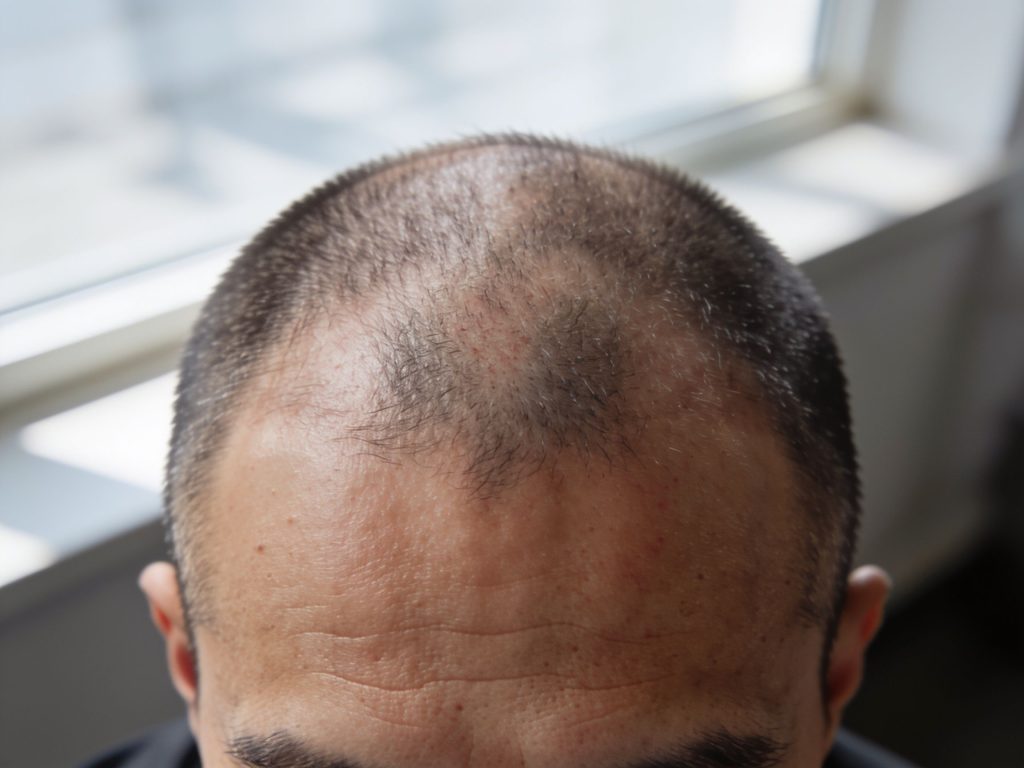
By Peggy Pliscott, SMP Artist at Precision Scalp
You have just finished a session and your scalp looks sharper than it has in years. Then, over the next few days, the pigment starts to lighten and you wonder whether it is working at all. This guide walks you through every phase of the 28-day healing window so you know exactly what is normal, what to protect, and when you can relax.
Days 1 to 4: the no-touch phase
The first four days are the most critical part of your aftercare. The pigment has been deposited into the upper dermis and needs time to stabilise before it is exposed to moisture, heat, or friction.
During this window, keep your scalp completely dry. No washing, no shampoo, no sweating. That means skipping the gym, avoiding saunas, and steering clear of any activity that raises your core temperature enough to produce sweat. Even a short, vigorous walk counts if it gets you sweating. Sweat dilates the pores and can push pigment out before it has had a chance to anchor.
Styling products, including sprays, waxes, and dry shampoos, are off the table entirely. Your scalp will likely look slightly red and the dots may appear darker and sharper than the finished result. That is normal. You are seeing pigment before the skin has had time to soften and integrate it. Do not judge the outcome yet.
Sleep on a clean pillowcase. Keep your hands away from your scalp. If you need to touch it for any reason, use clean hands and do not rub.
Days 5 to 10: gentle reintroduction
From day five, you can begin washing your scalp gently with lukewarm water and a mild, fragrance-free shampoo. The operative word is gently. Use your fingertips, not your nails, and work in slow circular motions without applying pressure. Pat dry with a clean towel rather than rubbing.
Sun exposure is still a significant risk during this phase. UV light is one of the primary drivers of pigment fading, and your scalp is particularly vulnerable while it is still healing. Stay out of direct sunlight where possible, wear a hat if you need to be outdoors, and do not apply sunscreen yet, as the skin barrier is not fully restored.
The pigment will continue to lighten during this phase. This is expected and is part of the scalp micropigmentation healing timeline. The surface layer of skin over the pigment dots is shedding naturally, which makes the work appear softer and lighter than it did immediately after your session. Some men find this unsettling, but it means the process is progressing exactly as it should. The real result becomes visible once all three sessions are complete and the scalp has fully settled.
You can shave your head again from around day five, but do so carefully with a clean blade and minimal pressure over treated areas.
Days 10 to 28: the full healing phase
From day ten, you can return to your normal grooming routine. The key addition is SPF. Apply a broad-spectrum SPF 30 to 50 sunscreen to your scalp daily, every day, not just when you are at the beach. Sun exposure is the single biggest factor in how long your SMP density result lasts, and consistent protection from day ten onwards makes a measurable difference over the years.
Swimming is the main restriction that remains in place until the 28-day mark. Chlorine in pools and salt in the sea are both aggressive on healing pigment. Even if your scalp looks and feels fine, the deeper dermal layers are still completing their repair cycle. Wait the full four weeks before swimming.
During this phase, you may notice the pigment looks almost too light, especially if you are comparing it to photographs taken immediately after your session. This is the healed baseline for a single session, and it is intentional. Male density SMP requires a minimum of three sessions, sometimes four, with each session progressively increasing the dot density from around 40 dots per square centimetre in early sessions up to 80 to 100 dots per square centimetre in final sessions. The cumulative effect after all sessions are complete is what delivers the finished look.
Redness typically clears within two to three days. Any minor flaking or tightness in the scalp resolves within the first two weeks for most men. By day 28, the skin is fully healed and the pigment has reached its settled colour. This is the right moment to assess the result before your next session.
What fades faster and what holds longer
Understanding why pigment fades helps you protect the result more intelligently. The epidermal layer of the scalp turns over roughly every 27 days, clearing some of the surface pigment in that cycle. Pigment deposited deeper in the dermis persists longer, held within fibroblasts, but it is gradually broken down by sun exposure, immune activity, and the natural ageing of the skin.
Men with oily skin tend to experience faster fading than those with drier scalps. High sun exposure without SPF protection accelerates the process significantly. Conversely, dry skin, consistent SPF use, and avoiding tanning beds and prolonged outdoor exposure all support a longer-lasting result. With good aftercare for thinning hair and density SMP, most men see results that hold well for three to five years before a touch-up appointment is needed.
Touch-up sessions are routine maintenance, not a sign that something went wrong. They typically take place every three to four years and require less chair time than the original treatment course.
Frequently asked questions
Can I go to the gym in the first week after my SMP density session?
No. During days one to four, avoid any exercise that causes sweating. Sweat can dilate pores and displace pigment before it has stabilised. From day five, light activity is generally acceptable, but avoid heavy training, saunas, and steam rooms until day ten, when the skin is more fully recovered.
Why does the pigment look so light after a few days?
Lightening between days three and ten is a normal part of the scalp micropigmentation healing timeline. The outer skin layer sheds over the pigment dots, making the work appear softer. The true result builds progressively across three to four sessions, with dot density increasing each time. Do not assess the final outcome after just one session.
When can I start applying SPF to my scalp after treatment?
Wait until day ten before applying sunscreen. Before that point, the skin barrier is still healing and products can irritate it. From day ten onwards, apply a broad-spectrum SPF 30 to 50 daily. Sun exposure is the primary driver of SMP pigment fading, so consistent SPF use significantly extends how long your result lasts.
How many sessions does male density SMP require?
Male density SMP requires a minimum of three sessions, and sometimes four, depending on the degree of thinning and the density goal. Sessions are spaced several weeks apart. Each session increases pigment dot concentration progressively, from around 40 dots per square centimetre early on to 80 to 100 dots per square centimetre in the final session.
How long do SMP density results last before a touch-up is needed?
Most men see their SMP density results hold well for three to five years before a touch-up appointment is needed. Longevity depends on sun exposure, skin type, and aftercare habits. Men who apply SPF daily, avoid tanning beds, and have drier skin types typically retain results longer. Touch-up sessions are routine and much shorter than the original treatment course.