
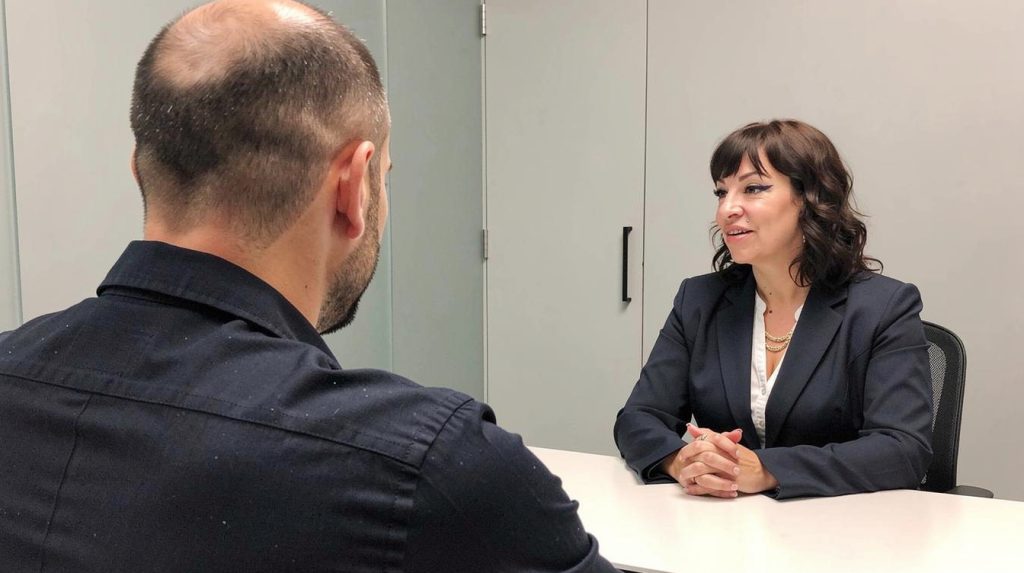
By Peggy Pliscott, SMP Artist at Precision Scalp
If you have a linear scar running across the back of your head from a hair transplant, you already know how limiting it can be. You might avoid short haircuts or feel self-conscious at the barber. FUT scar camouflage through scalp micropigmentation offers a practical, non-surgical way to reduce the visibility of that scar and restore your confidence in how you wear your hair.
I use my background in professional photography, celebrity makeup artistry, and advanced SMP training to approach every scar treatment with an artist’s eye. Having worked across fashion capitals and publications like Vogue, GQ Magazine, and Harper’s Bazaar, I understand how light, tone, and texture interact on skin. That understanding is essential when working on scar tissue, which behaves very differently from normal scalp skin.
What makes FUT strip scars challenging to conceal
FUT (follicular unit transplantation) is the most common type of hair transplant scar I see. The procedure leaves a horizontal strip scar across the donor area at the back of the head. These scars vary widely in width, texture, and colour, which directly affects how well SMP can reduce their appearance.
Scar tissue lacks the same structure as surrounding skin. It can be thicker, smoother, shinier, or a different shade. These inconsistencies mean that pigment deposits may heal differently within the scar compared to healthy scalp. This is exactly why strip scar concealment requires specialised skill and a cautious, layered approach.
The best candidates for SMP for FUT scars have tissue that is fully healed, relatively flat, and close in colour and texture to the surrounding scalp. When those conditions are met, results can be remarkable. When they are not, an experienced artist knows how to manage expectations and adjust technique accordingly.
Realistic expectations for scar camouflage results
I always have an honest conversation with my clients before beginning any scar work. Strip scar concealment through SMP is never a complete erasure. Under ideal conditions, you can expect approximately 85% reduction in the scar’s visibility. That is a significant improvement, but understanding the limits upfront is essential.
Several factors influence outcomes. Flat scars with consistent skin texture respond best to pigment. Raised, keloid, or very wide scars present greater challenges because pigment may not retain evenly. Scars that are unusually pale or shiny can also affect how natural the final result looks.
I work across multiple sessions, building density gradually and assessing how the scar tissue accepts pigment at each stage. This conservative approach allows me to fine-tune colour matching and dot placement to blend the scar into the surrounding scalp as seamlessly as possible.
Why artist experience matters for SMP on scar tissue
Not every SMP practitioner should perform scar camouflage. Working on scar tissue requires a fundamentally different skill set than standard scalp micropigmentation on healthy skin. Needle depth, pigment saturation, and spacing all need adjustment based on how the scar tissue presents.
I trained in Los Angeles with the founding practitioners of scalp micropigmentation, learning directly from the artists who developed the techniques now used worldwide. That foundation, combined with years of work in photography and makeup for print and film, gives me an intuitive sense of how to create the illusion of density in difficult conditions.
SMP for FUT scars demands patience, precision, and an ability to read how tissue responds in real time. At Precision Scalp, every treatment is a boutique experience tailored to the individual. No two scars are alike, and no two treatments should be either.
Other transplant scars that SMP can address
While FUT strip scars are the most common reason clients seek FUT scar camouflage, they are not the only type I treat. FUE (follicular unit extraction) leaves small dot scars across the donor area. These are generally the easiest to conceal and respond very well to SMP.
I also occasionally see scalp reduction scars and older plug-type transplant scars, though these are increasingly rare. Each type requires its own approach. The principle remains the same: careful pigment placement to reduce contrast between the scar and surrounding skin, creating a more uniform appearance.
- FUT strip scars are the most common and benefit greatly from experienced SMP treatment
- FUE dot scars are typically the easiest to conceal with excellent results
- Scalp reduction and plug scars are rare but treatable with the right technique
- All scar work requires fully healed tissue for best pigment retention
Frequently Asked Questions
How effective is FUT scar camouflage with SMP?
Under ideal conditions, SMP can reduce the visibility of a FUT strip scar by approximately 85%. Results depend on scar characteristics including flatness, texture, and colour consistency. Fully healed, flat scars with skin tone close to the surrounding scalp respond best. Multiple sessions allow for gradual, natural-looking density building.
How long should I wait after surgery before getting strip scar concealment?
Your scar should be fully healed and mature before SMP treatment begins. This typically means waiting at least 12 months after your FUT procedure. Mature scars have stabilised in colour and texture, which allows pigment to deposit more predictably and gives your artist the best foundation for effective concealment.
Does SMP on scar tissue hurt more than on regular scalp?
Sensation varies between clients. Some people find scar tissue less sensitive because nerve endings may have been disrupted during surgery. Others experience slightly more discomfort in certain areas. At Precision Scalp, I use careful technique and adjust needle depth throughout the session to keep you as comfortable as possible.
How many sessions are needed for SMP for FUT scar treatment?
Most FUT scar camouflage treatments require two to four sessions spaced several weeks apart. Scar tissue can be unpredictable in how it retains pigment, so a gradual approach produces the most natural results. Each session builds upon the last, allowing precise colour matching and density adjustments.
Can SMP completely hide my hair transplant scar?
SMP significantly reduces scar visibility but does not achieve 100% concealment. The goal is to blend the scar into surrounding scalp so it becomes far less noticeable. With an experienced artist and favourable scar characteristics, the improvement is substantial and most clients feel confident wearing shorter hairstyles again.